Updates

What we shipped, when, and what it changes for you.

September 2026

  1. Improved

    Competitor prices, and recommendations that tell the truth
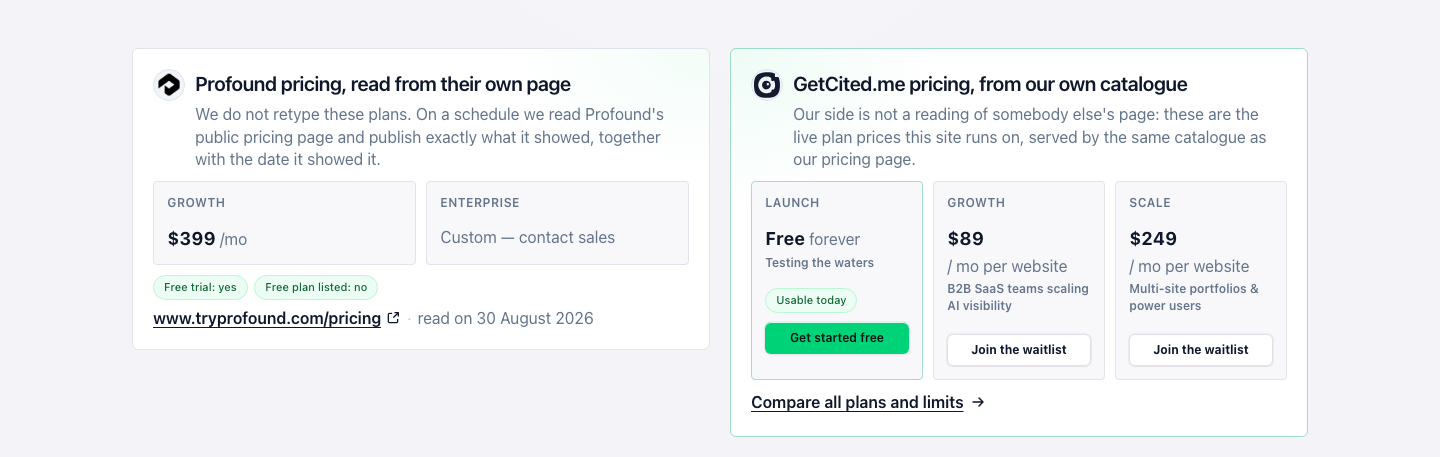
    A competitor's real price, with the date we read it
    A competitor's real price, with the date we read it

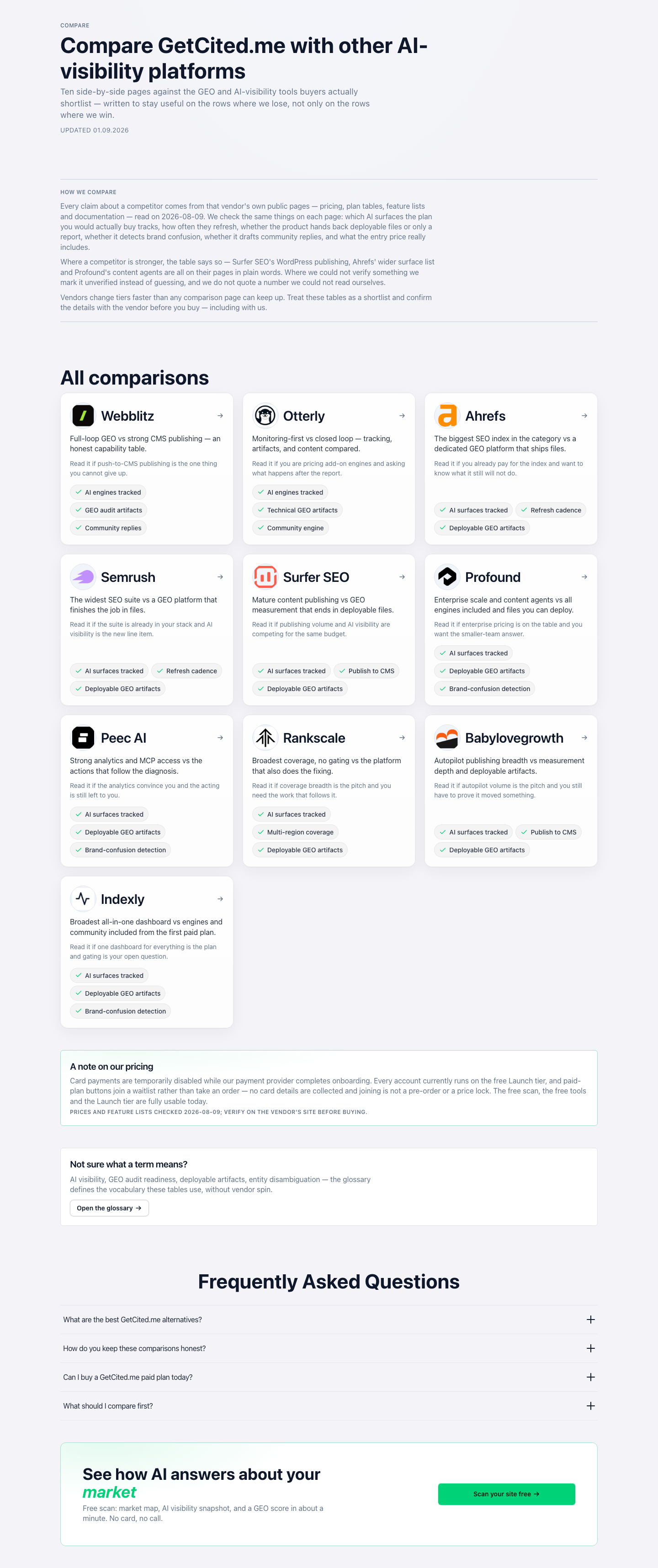
    Comparison pages show competitors' actual prices with the date we read them from their own pricing page, so a stale number is visibly stale rather than quietly wrong.

    On the audit side: we verify a self-citation before trusting it, stop telling a page to answer questions it already answers, stop scoring site machinery as citable content, and require a real question before advising FAQ schema.
August 2026

  1. New

    Google Search Console

    Thirty days of search clicks and impressions beside AI visibility
    Thirty days of search clicks and impressions beside AI visibility

    Connect Search Console and pick the property. Topic suggestions stop being guesses — they are seeded from the searches that already reach you.

    You get thirty days of clicks and impressions next to your AI visibility, the searches Google sends you that no tracked question asks about, and an answer to the question every publisher has: did Google index the page I just published?

  2. New

    Settings rebuilt, and an MCP server

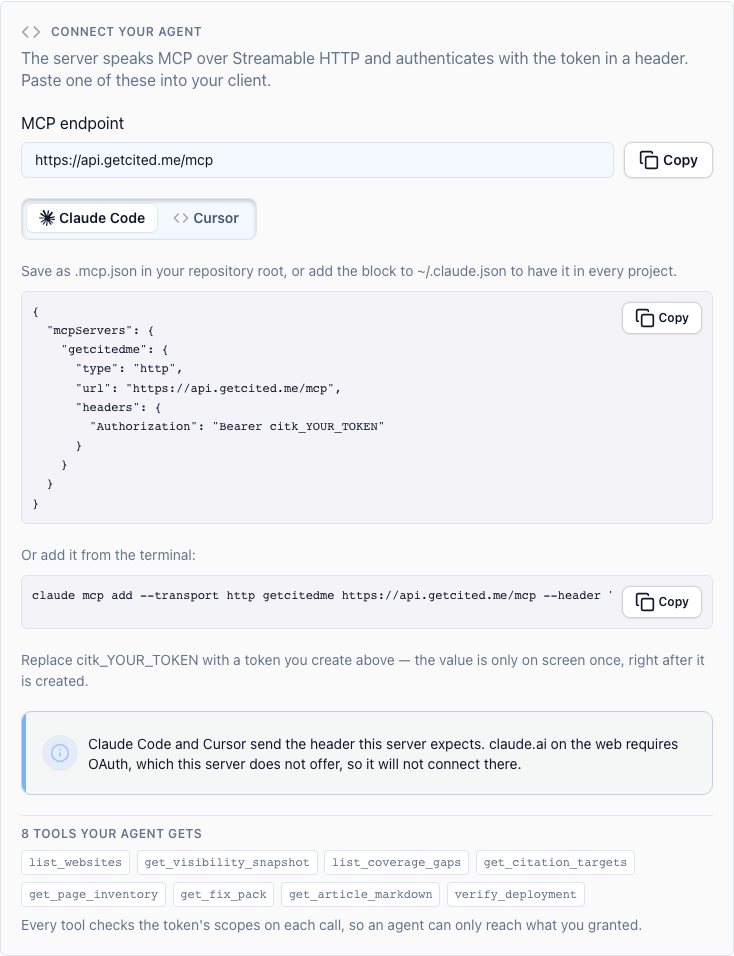
    The MCP connection your own assistant reads from
    The MCP connection your own assistant reads from

    Settings split into account, team, subscription, notifications, integrations, reports and MCP — each doing one thing.

    The MCP server lets you point your own assistant at your visibility data: connect it, issue a scoped token, and ask about your own numbers from wherever you already work. Tokens are scoped and revocable; API keys are gone.

  3. New

    A help centre, and a guide through the first run

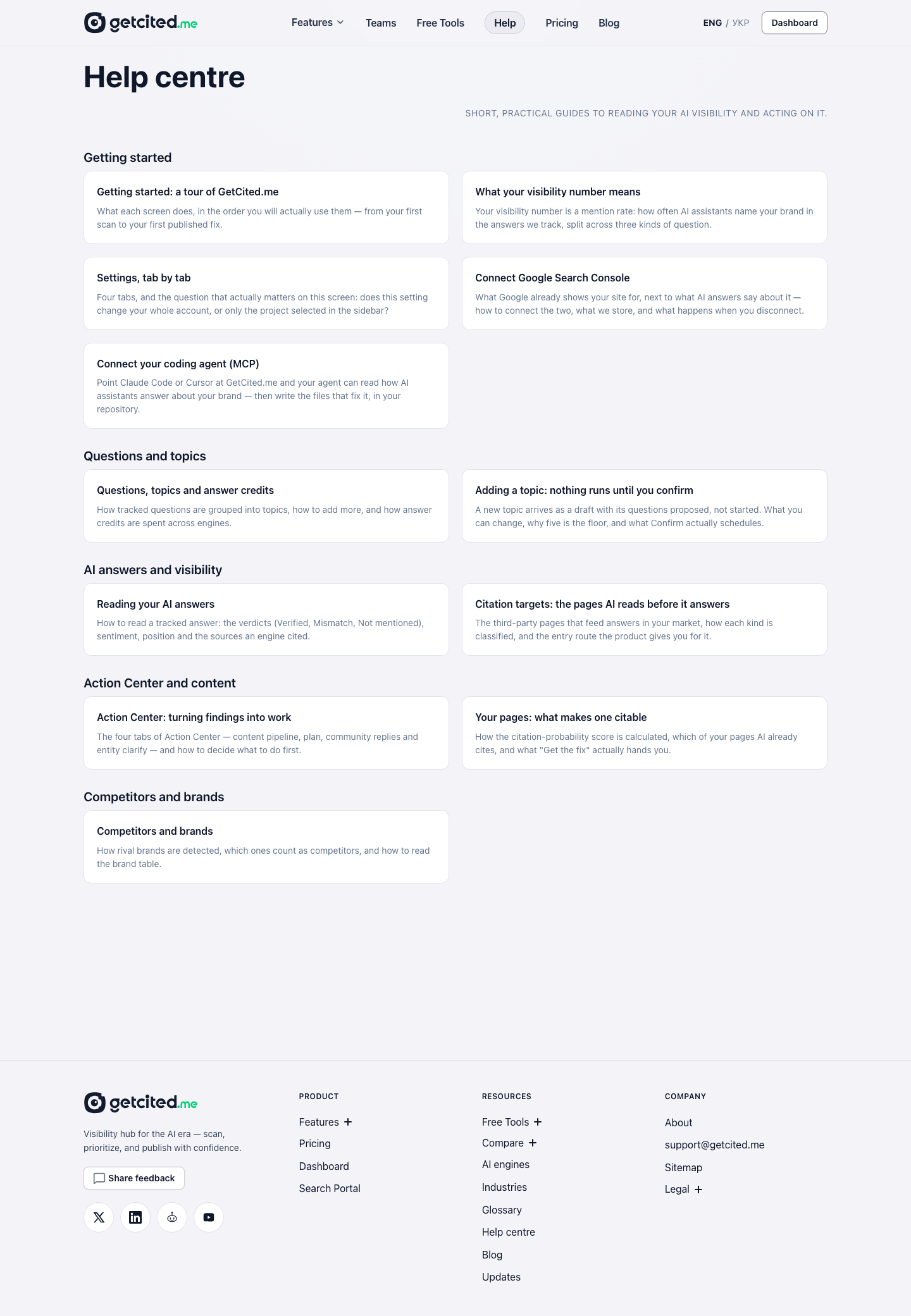
    Twelve guides, grouped by what you are trying to do
    Twelve guides, grouped by what you are trying to do

    Short, practical guides: what your visibility number means, how tracked questions and answer credits work, how to read an AI answer, what to do with what you find.

    The screenshots are captured from the running product rather than drawn, so what you read matches what you see. First-run steps now walk you through the same ground inside the app.

  4. New

    Share an audit with a client or a developer

    Send a GEO audit to whoever will implement it. They open a link — no account — and see the checklist, the files to deploy and the exact change per page.

    When they are done they mark it finished, and you see that on your side. The report tracks what was ticked and by which link.

  5. Improved

    An onboarding that shows you something first

    One click with Google. Instead of a form about your brand, we read your site and show you a summary to confirm or correct.

    Before we ask you to register, you see one real AI answer about your own brand — not a demo, your question and what the model actually said. And if you close the tab, your progress is still there when you come back.

  6. Improved

    Visibility by model, by market, and what moved

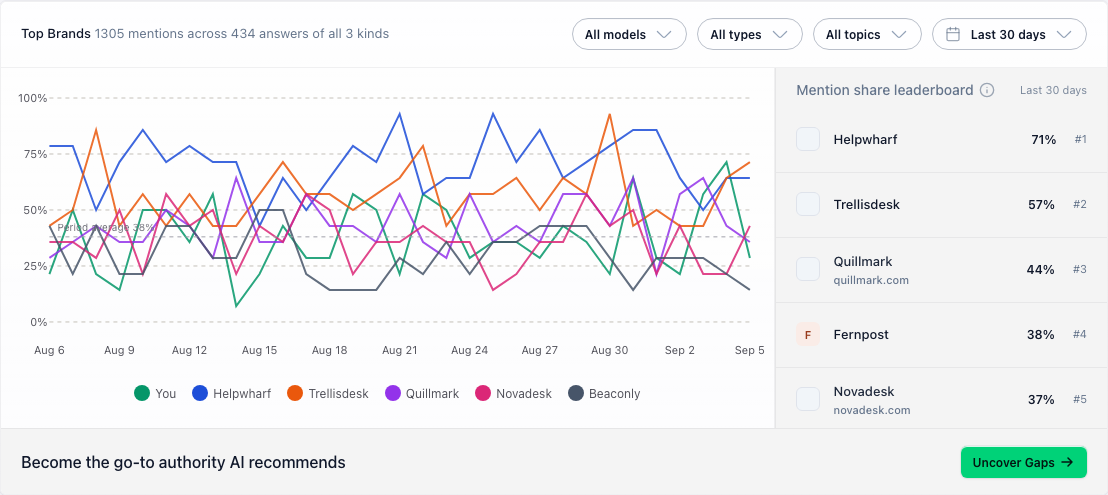
    Visibility over time, per brand and per engine
    Visibility over time, per brand and per engine

    Every engine is shown on its own, because they disagree, and an average across them hides which one dropped you.

    Google's AI Overview can be compared across markets with a verdict on whether your domain is cited in each. And the dashboard now says what moved since the previous run rather than only where you stand today.

  7. Improved

    Community Replies grew up

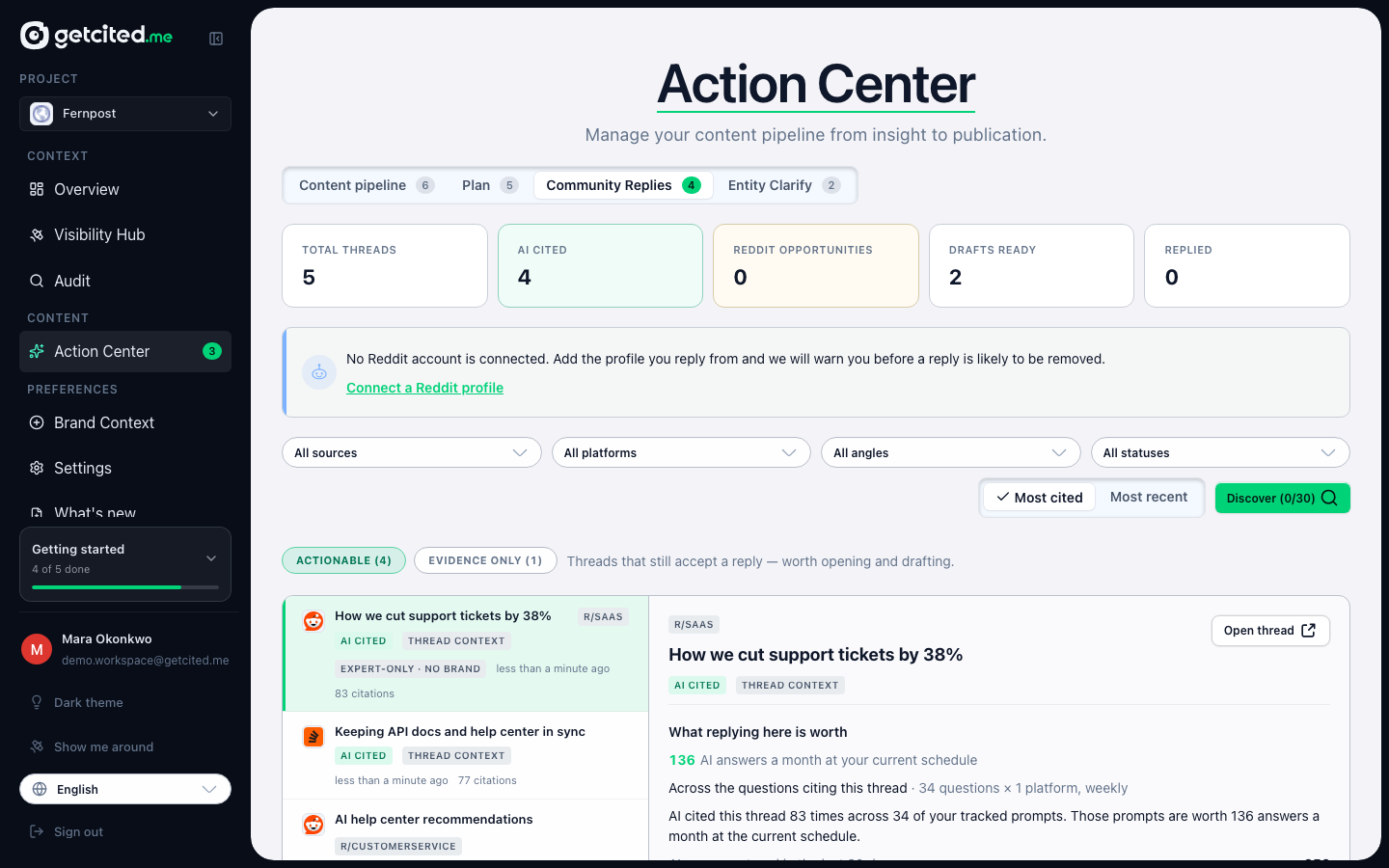
    Threads worth answering, separated from threads that are only evidence
    Threads worth answering, separated from threads that are only evidence

    Not every thread that cites your category is worth a reply. They are now split: ones where an answer would help, and ones that only tell you where the models are looking.

    Choose how you disclose who you are, see whether your account is ready to post at all, get warned when a subreddit bans AI-written replies, and find out afterwards whether the reply you posted survived moderation. You post it — we never do.

  8. New

    A publishing plan, briefs you write, and dictation

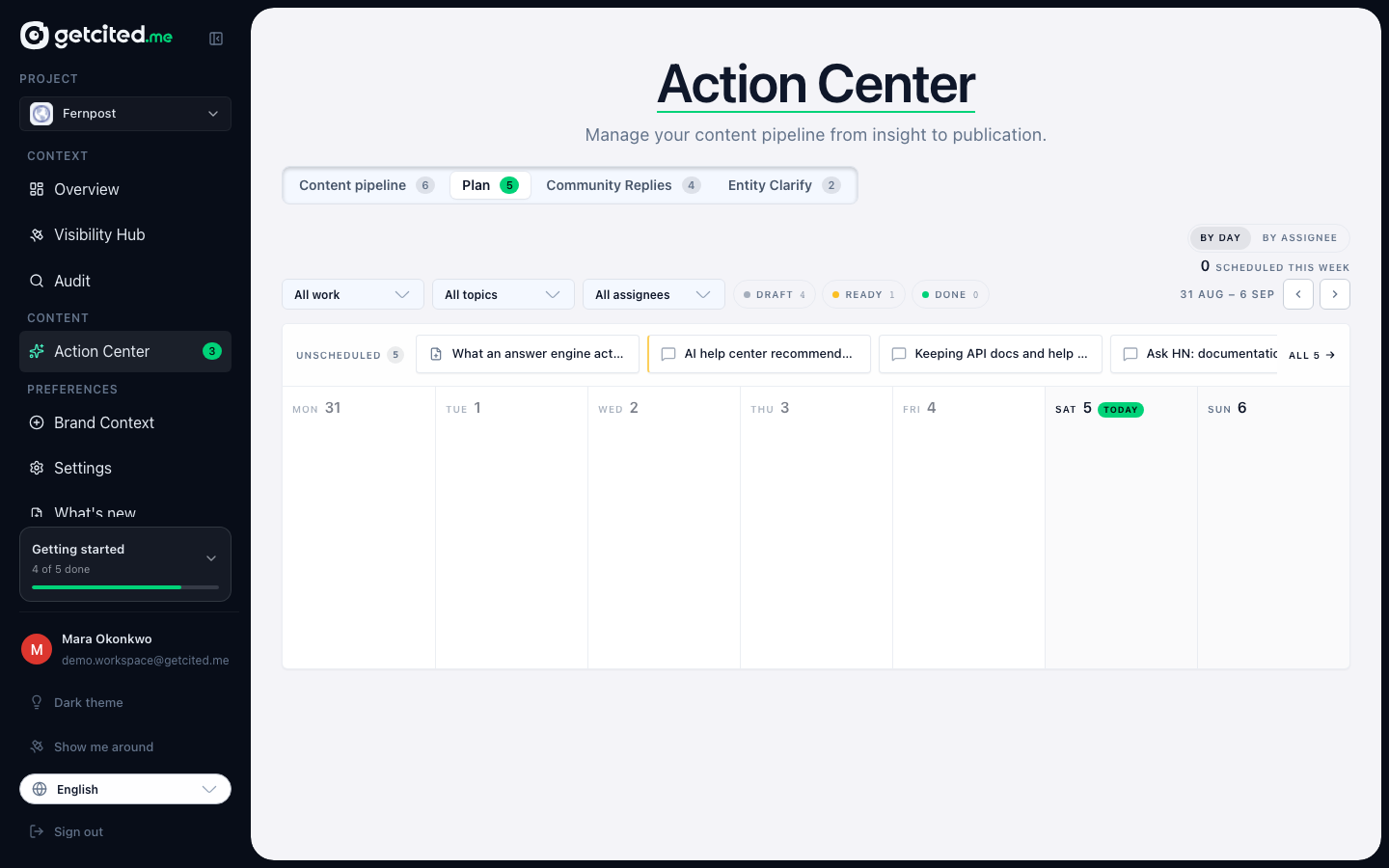
    A Monday-to-Sunday week with target dates and owners
    A Monday-to-Sunday week with target dates and owners

    The publishing plan lays out drafts and community replies across a Monday-to-Sunday week with a target date and an owner. It reminds you and then re-measures. It does not publish anything for you.

    You can also write a brief from scratch instead of picking one we proposed — and describe it out loud if that is faster. The recording is transcribed and thrown away.

  9. Improved

    Articles you can defend

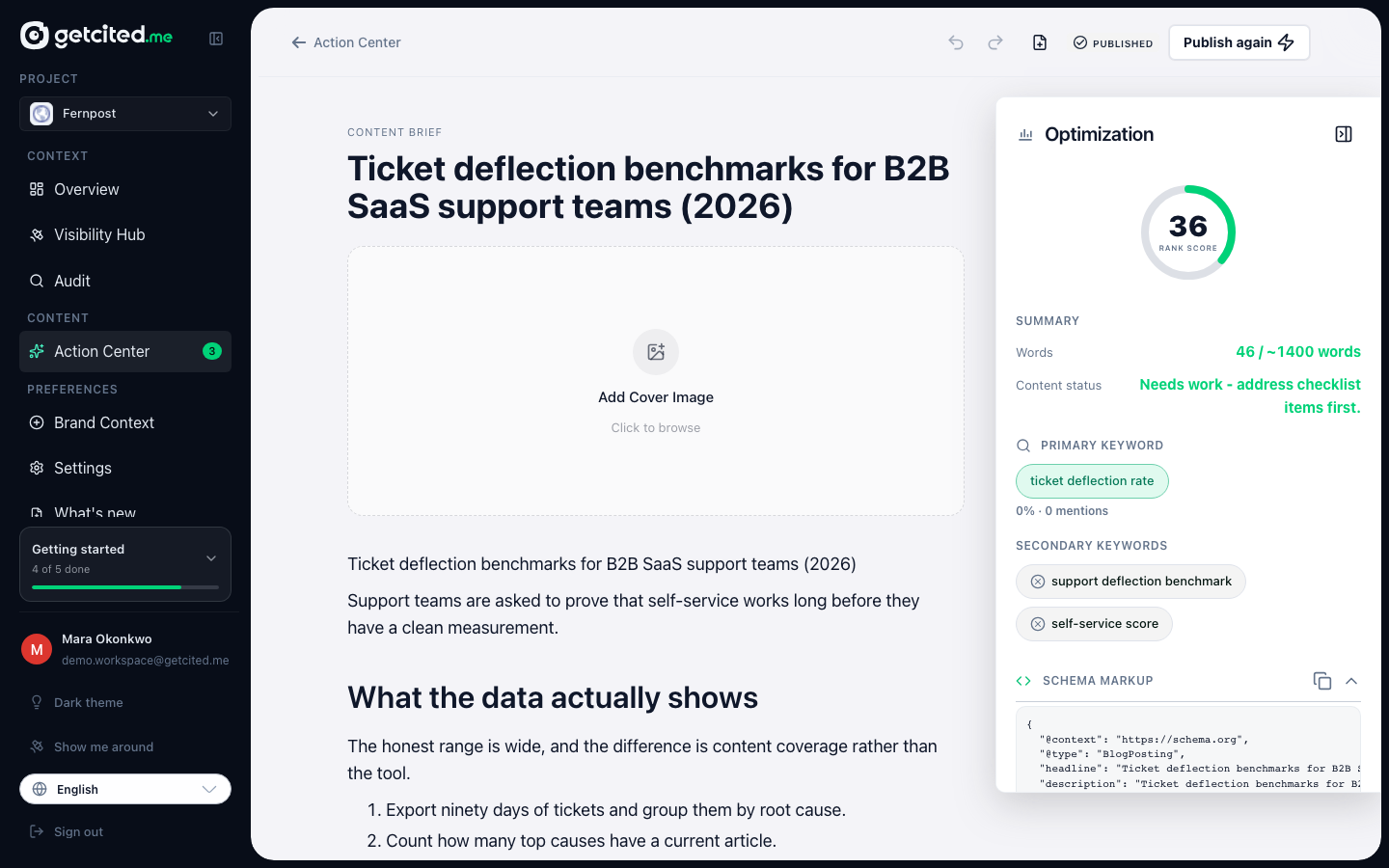
    The brief editor, where the warnings appear before you publish
    The brief editor, where the warnings appear before you publish

    Draft articles now pull competitor claims from those competitors' own pages, with the date each was read, instead of whatever the model remembered.

    Before you publish, the editor flags unsourced claims, placeholder pricing and text that drifted into another script. It is a warning, not a block — but the things worth checking are named.

  10. New

    Comparisons, engines, industries — and the blog

    Side-by-side pages against the tools people weigh us against
    Side-by-side pages against the tools people weigh us against

    Side-by-side pages against the tools people weigh us against, a reference page for each AI answer engine explaining how it picks what to cite, and industry pages covering the buying questions specific to a field.

    The blog opened at the same time, in English and Ukrainian, and it is written to be readable by the engines it is about.

  11. New

    Four more free tools

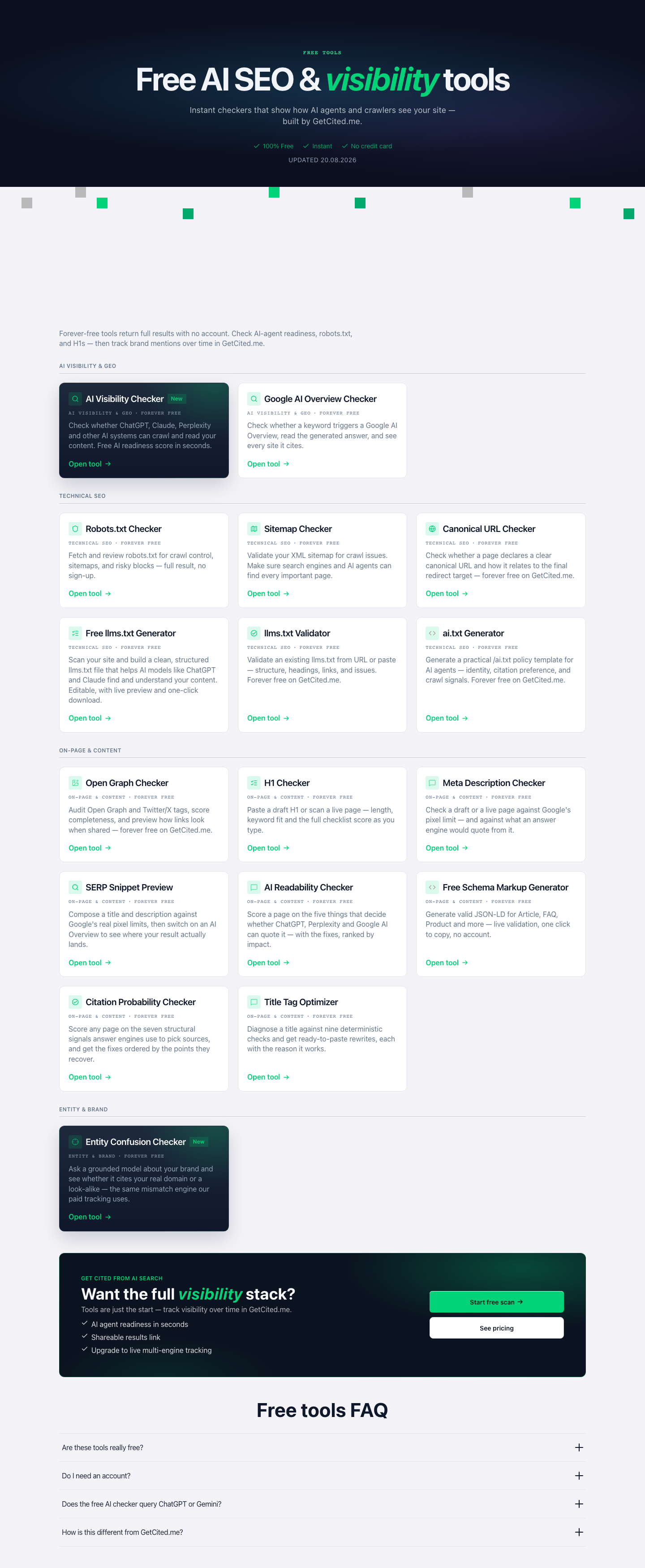
    Seventeen free checkers, no account needed
    Seventeen free checkers, no account needed

    The free suite grew to seventeen. The new four go past the technical checks: estimate how likely a page is to be cited, rewrite a title so a machine reader understands it, see whether Google shows an AI Overview for a query and who it names, and find out if models are confusing you with a similarly named company.

  12. Improved

    Organic visibility became the headline number

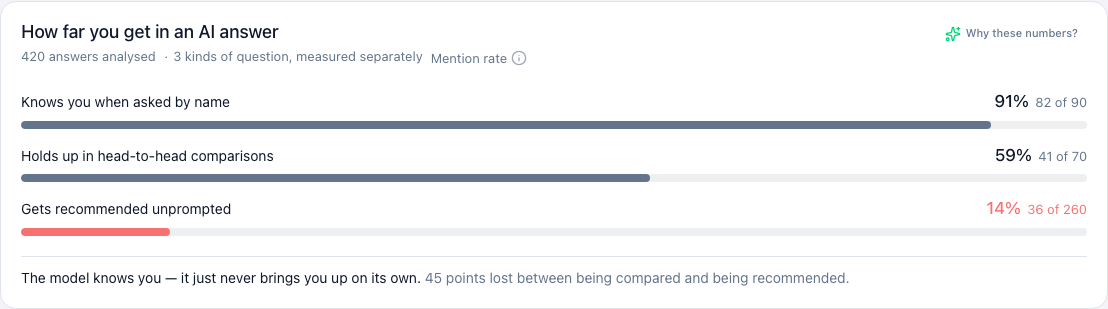
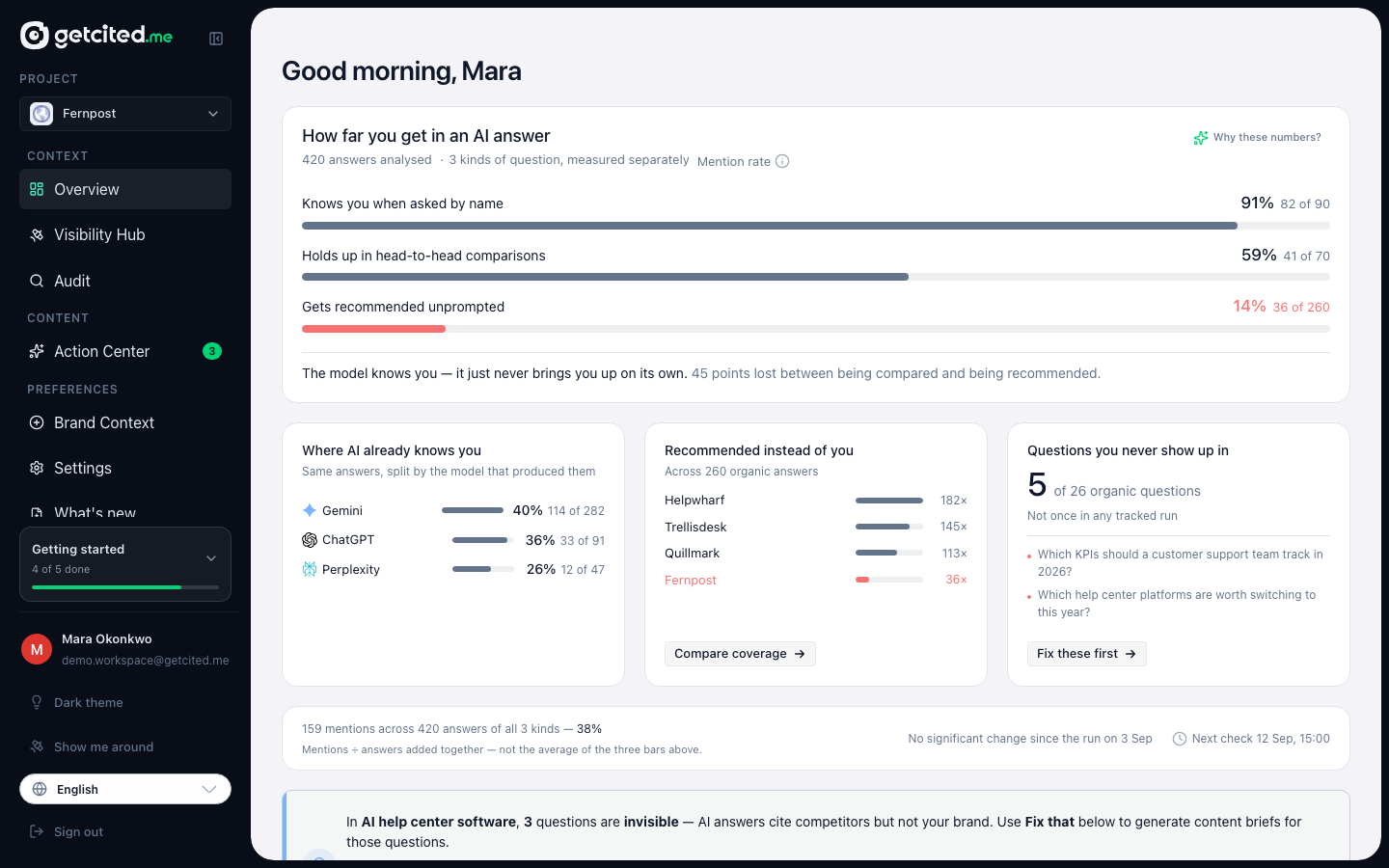
    The three question classes, each with its own numerator and denominator
    The three question classes, each with its own numerator and denominator

    The number on your dashboard is now the share of answers that mention you when nobody asked the model about you by name. That is the one that means something.

    Being recognised when asked directly, and winning head-to-head comparisons, are shown separately — they move independently, and a brand a model knows perfectly can still lose every comparison. Blending them into one score hid exactly that.

  13. New

    Invite your team

    The workspace owner invites collaborators; each gets their own login rather than sharing one account. Billing stays with the owner.

    Revoking a collaborator also disables the public links they created — a shared report should not outlive the person's access to the account.

  14. New

    The Visibility Agent

    An assistant built into the workspace, not a chatbot bolted onto it. It reads your account's own live data — which questions AI answers, which of your pages get cited, where a rival is being recommended instead of you — and tells you what it found in plain sentences.

    Then it proposes concrete work: a content brief for a question you never appear in, an entity clarification when models are confusing you with a similar name. Each proposal shows what it will spend before you decide, and nothing runs until you approve it.

    Ask it a question directly, or open it from an anchor on any screen to ask about what you are looking at.

July 2026

  1. Improved

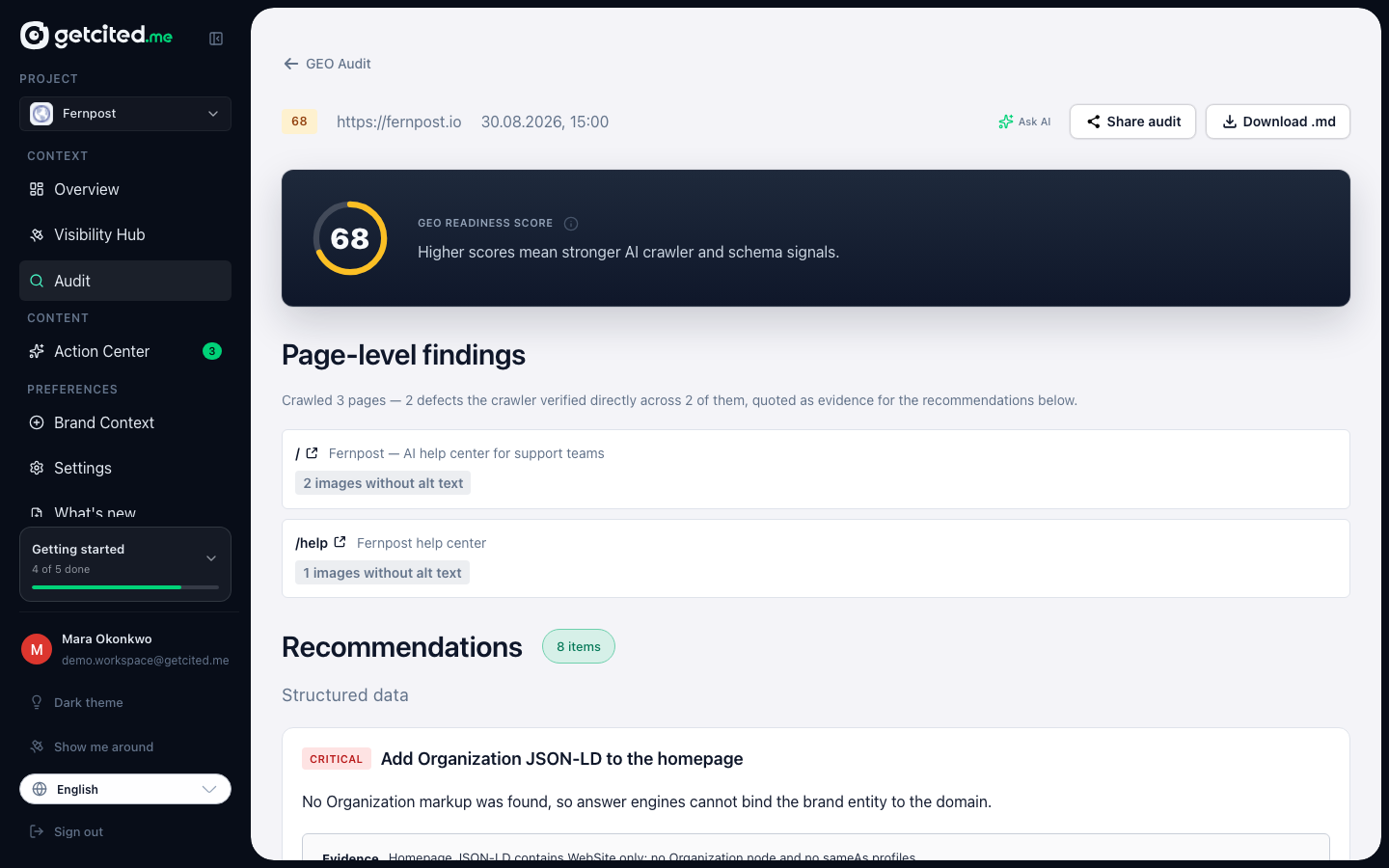
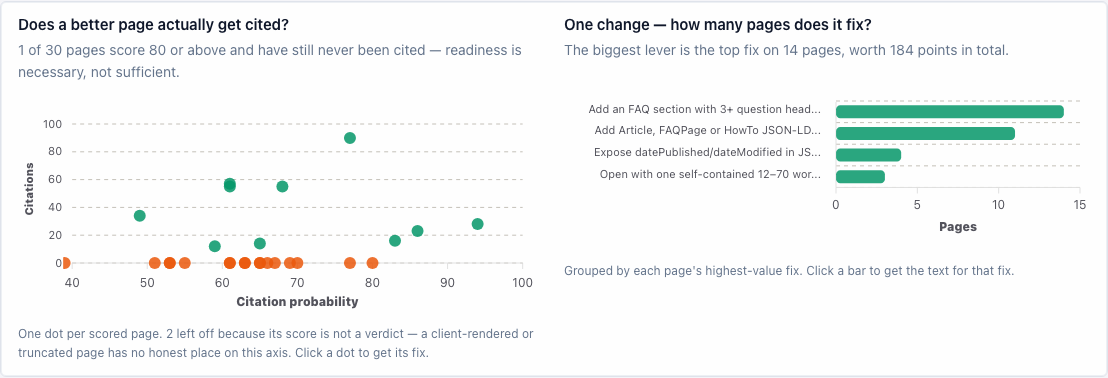
    The GEO audit names the page and the fix

    Findings tied to the page they were found on
    Findings tied to the page they were found on

    The audit stopped mixing two different questions into one number. Technical readiness — robots, sitemaps, structured data, whether an AI crawler can read you at all — is now separate from the content opportunities it finds.

    Pages are ranked by what they actually explain, and the audit no longer recommends FAQ schema or hreflang to sites that already have them. Every finding names the page and the change.

  2. Improved

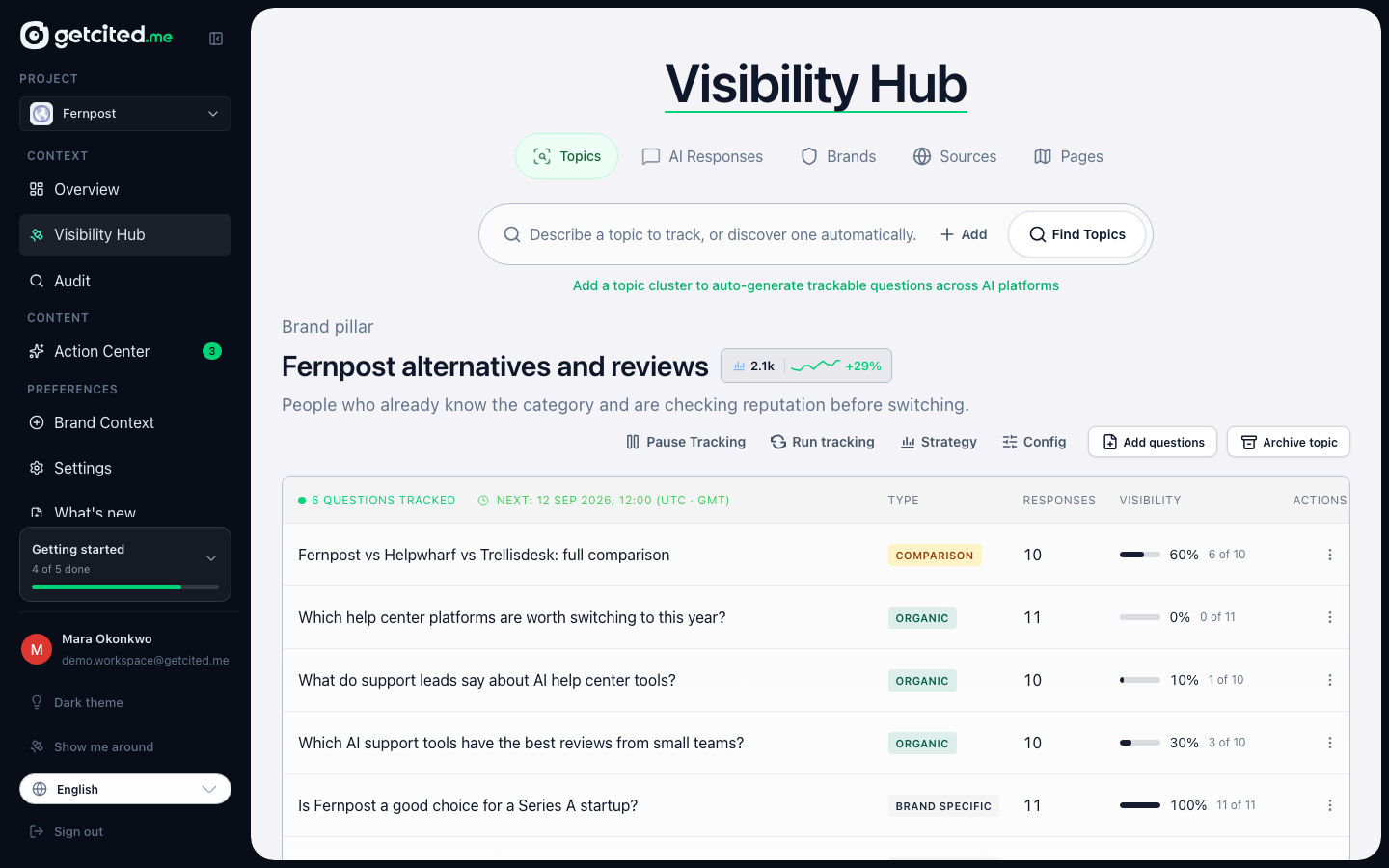
    Housekeeping for your topics

    Topic clusters, with archived ones out of the way
    Topic clusters, with archived ones out of the way

    Topic clusters can be archived and restored, so a seasonal or abandoned line of questions stops spending your tracking budget without losing its history.

    Detected brands now carry a role — competitor, partner, something else entirely — and a mention pointing at the wrong domain gets flagged instead of quietly counting as yours.

  3. New

    Client reports you can hand over as a link

    Reports snapshot what the AI engines said over a period and freeze it. Send the link; the recipient sees the report without an account, and it keeps working after your numbers move on.

    Links expire on a date you set, and you can revoke one at any time.

  4. New

    Thirteen free tools, no account needed

    Paste a URL and get an answer: does your robots.txt let AI agents in, is your sitemap reachable, are your canonicals consistent, does your llms.txt parse, do your titles and headings say what the page is about.

    No account, no email, no trial. If the result is useful on its own, take it and go.

  5. Improved

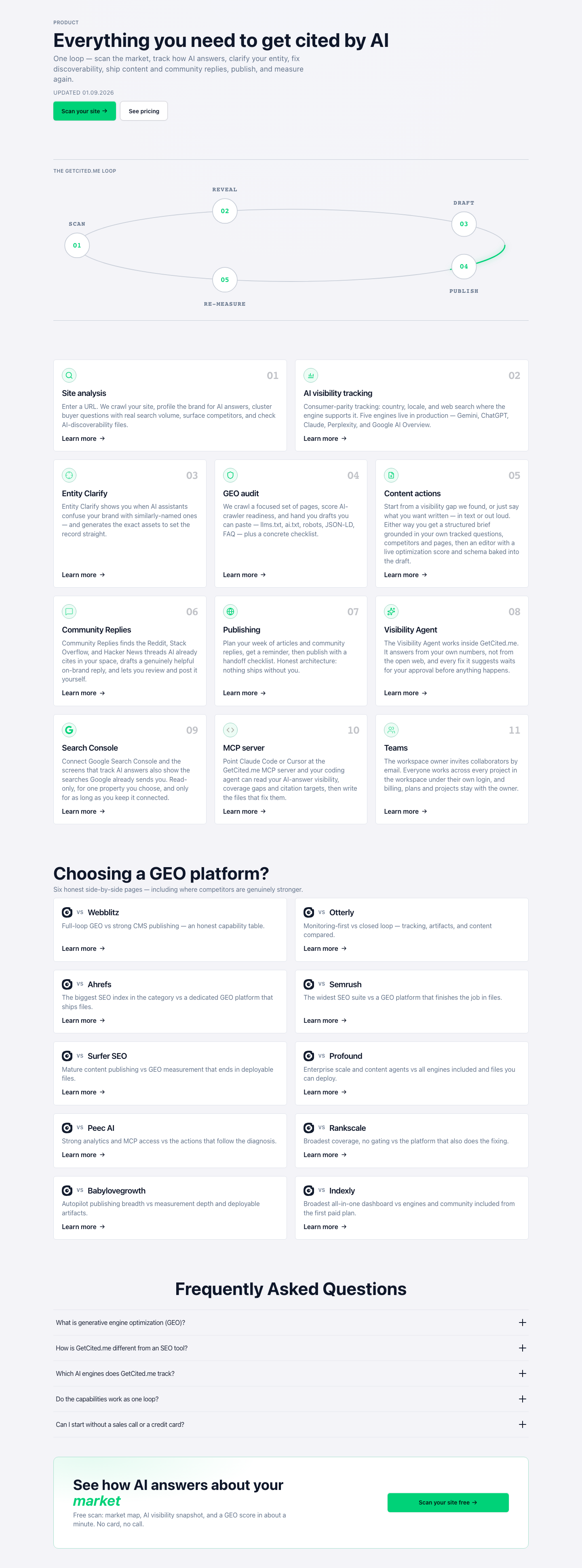
    A site you can read before you sign up

    A page for every capability, readable before you sign up
    A page for every capability, readable before you sign up

    Every surface of the product now has a page explaining what it does and what it will not do — visibility tracking, the GEO audit, content actions, publishing, site analysis, community replies, entity clarification.

    Alongside them, a glossary: generative engine optimisation, share of voice, citation source, answer engine. Plain definitions, no gatekeeping.

  6. New

    GetCited.me is live

    The Overview dashboard for a tracked brand
    The Overview dashboard for a tracked brand

    GetCited.me watches what ChatGPT, Gemini, Perplexity and Google's AI Overviews say when someone asks about your category — whether they name you, which sources they cite instead, and how that moves week to week.

    It audits your site the way a machine reader sees it, then turns the gaps into work you can actually do: briefs to write, pages to fix, threads to answer.

    Everything before today was us building it. This is where the public record starts.

  7. New

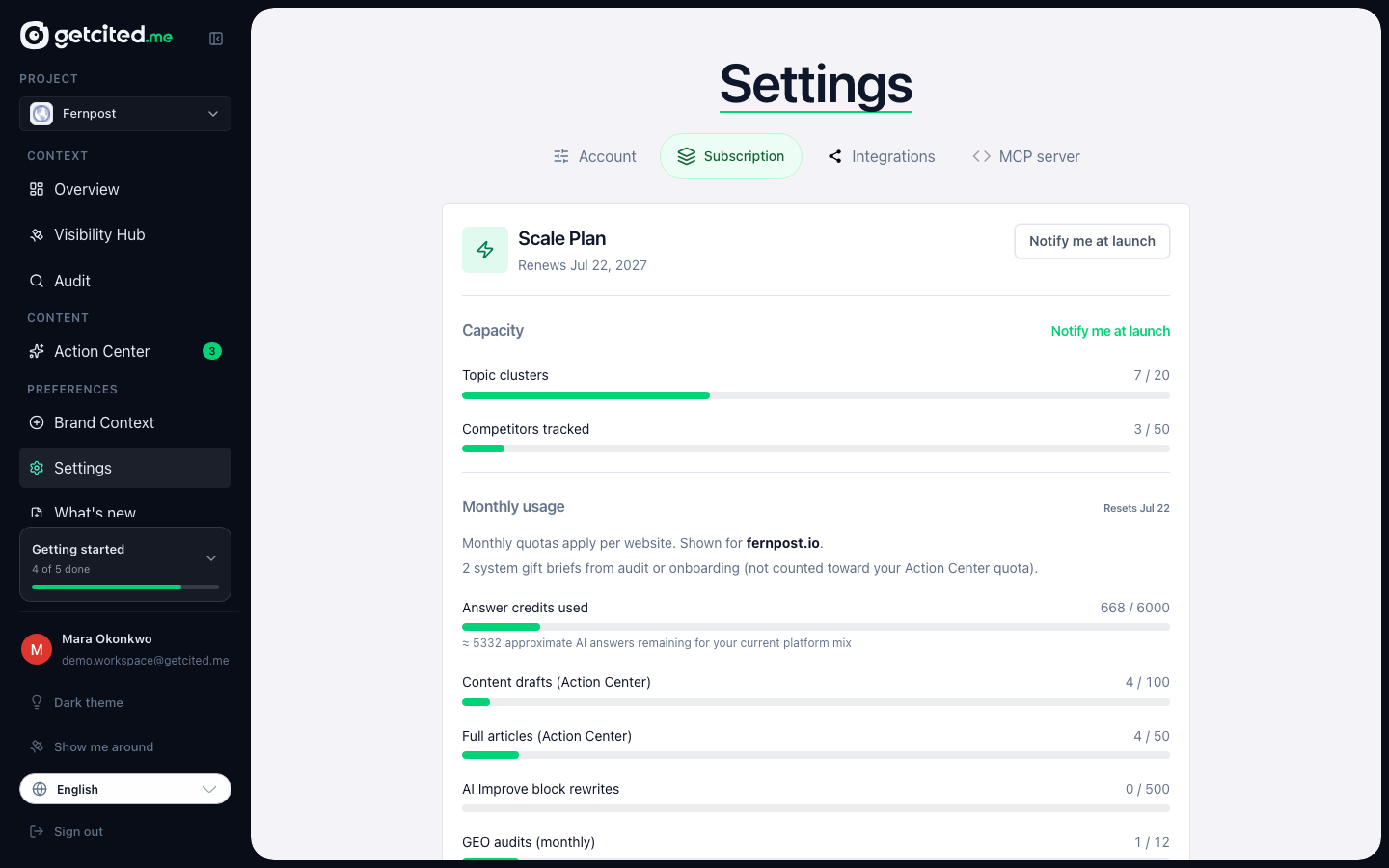
    Plans, seats and your account

    Plan limits and what the period has actually used
    Plan limits and what the period has actually used

    Three plans, each with its own tracking budget and site allowance. The subscription page shows what you have used this period and when it resets — not a vague meter, the real counts behind your limits.

    Sites are seats: add one, and the page tells you what it costs before anything is charged.