Your visibility number answers one question: when someone asks an AI assistant about what you sell, how often does it name you?
It is a rate, not a score out of 100 and not a ranking. This guide explains exactly how it is calculated, how to read the three bars it is split into, and why the number you see may look lower than you expected.
How it is calculated
We send each of your tracked questions to the AI engines on a schedule. Every answer that comes back is read and recorded: were you mentioned, in what position, with what sentiment, and which sources did the engine cite.
Mentions divided by answers is your visibility number. Nothing is estimated or modelled. The number moves only when a real answer either names you or does not.
Because it is a plain rate, it behaves predictably. Twelve mentions across forty answers is 30%. Add twenty more answers with six mentions in them and it is still 30% — the number tracks reality instead of rewarding volume.
The three bars
Open Overview and the first thing you see is the funnel:
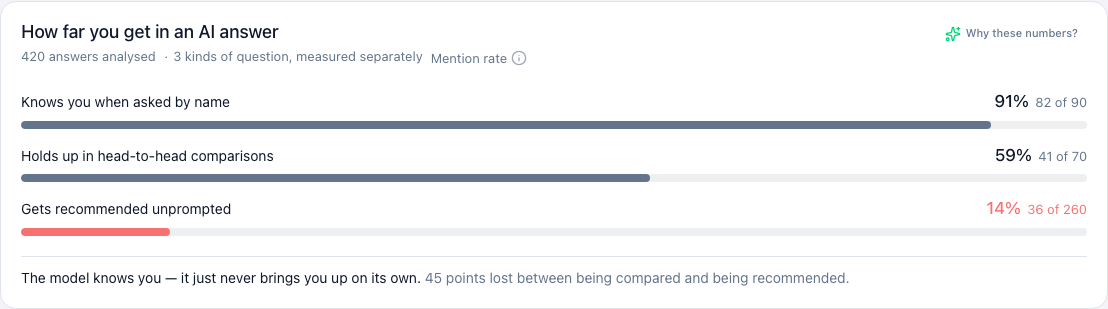
A brand can be famous and invisible at the same time, so the three question types are never blended into one figure.
Knows you when asked by name
Someone asks about you directly: "What is Acme Analytics?", "Is Acme any good?"
A high rate here means the model has heard of you and can describe you. That is worth knowing, but it is not demand — nobody asks about a brand they have not already heard of. Treat this bar as a control: if it is low, the model genuinely does not know you exist, and that is a different and more urgent problem.
Holds up in head-to-head comparisons
Someone names you and a rival: "Acme vs Globex for a small team".
This is where positioning shows. You will usually be mentioned — you are in the question — so what matters here is how you are described and whether the answer's recommendation lands on you or the other name.
Gets recommended unprompted
Someone describes a problem and names nobody: "What should a two-person agency use to track brand mentions?"
This is the bar that matters. Being recommended when you were not mentioned in the question is what actually brings customers. It is also the hardest bar to move, and for most brands it starts near zero.
The total is not an average
Underneath the three bars sits a total, and it is easy to misread:
Mentions ÷ answers added together — not the average of the three bars above.
Every mention across every answer, divided by every answer of all three types. So if you track many brand questions and few organic ones, the total leans toward the easy questions and flatters you.
Read the third bar first, then the total for context.
Why your number may look low
A new project is measured from a standing start. Four things commonly hold the first numbers down, and only one of them is a problem with the product.
- Not enough answers yet. Rates over a handful of runs swing wildly, so we show too few runs rather than a misleading percentage. Wait for the first full cycle.
- Questions that are too broad. "Best software" is a question nobody wins; the model will name the three largest incumbents every time. Narrow questions where you genuinely belong tell you far more.
- You are in a crowded category. If eleven brands are plausible answers, a 9% share is average, not bad. The leaderboard below the funnel shows you the field.
- The model does not know you. That is a real finding, not an error — and it is what the rest of the product exists to fix.
Reading the leaderboard
Under the funnel, Top Brands shows who actually gets named in your market.
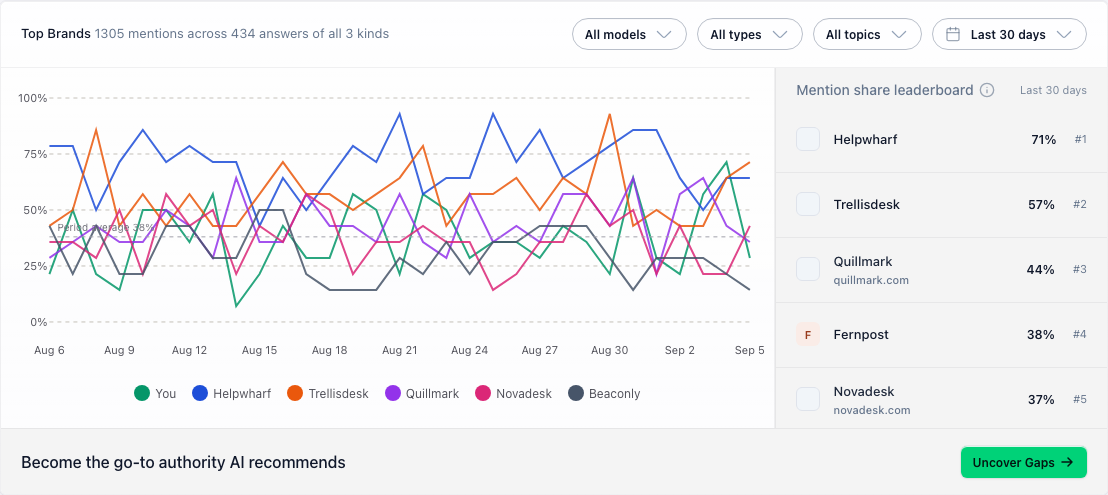
Two useful habits:
- Look at who is above you, not at your own row. Those are the answers your customers are being given today.
- Look for names you do not recognise. Assistants routinely recommend brands that are invisible in classic search rankings, because they are well described on sources the model trusts.
Where the number comes from, answer by answer
Any figure on Overview can be traced to the individual answers behind it. Open Visibility Hub → AI Responses:
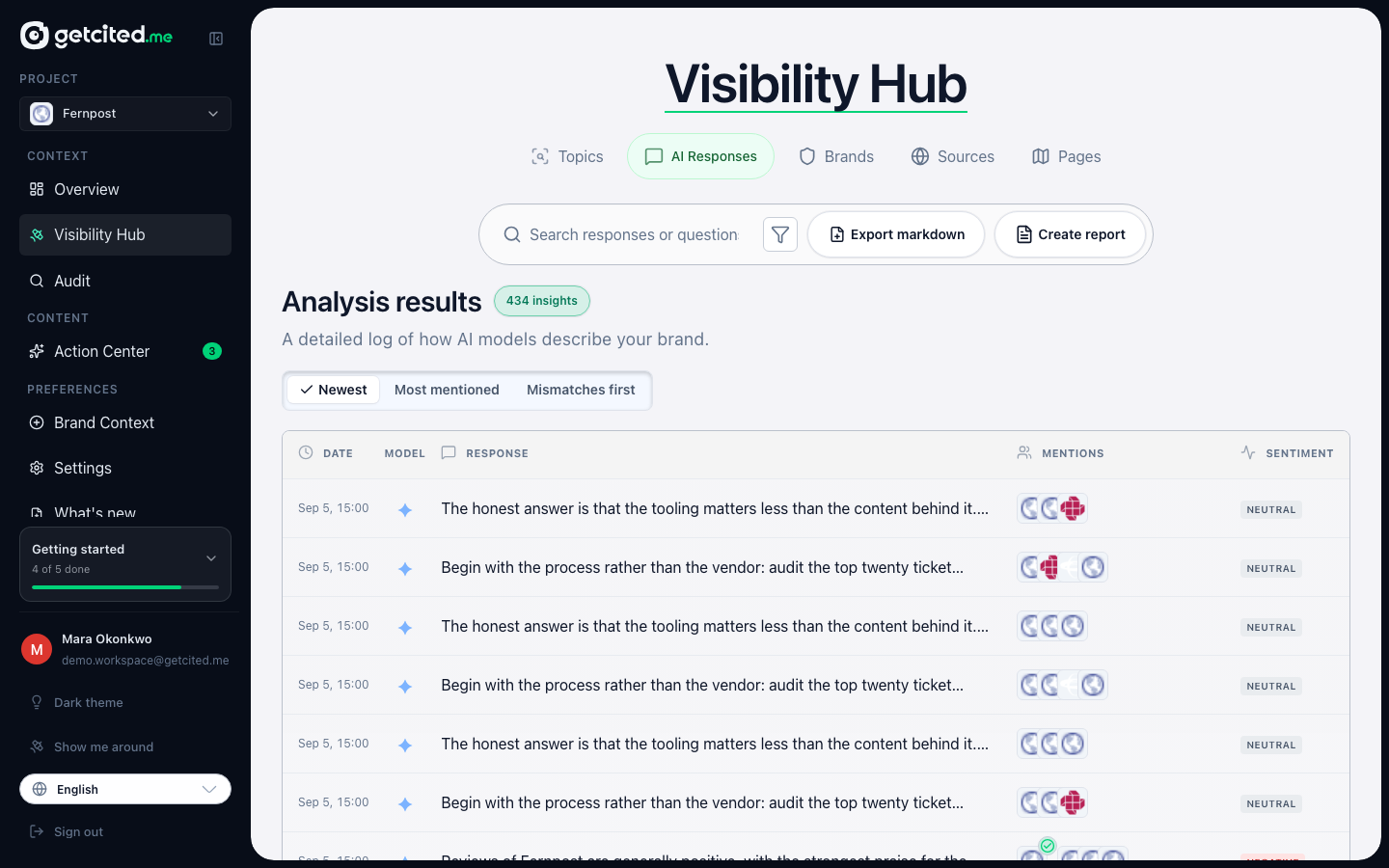
Every row is one real answer from one engine. Open it and you see the full text, the verdict, and the sources cited. If a number surprises you, five minutes here explains it.
Common questions
Does the number include paid or branded search?
No. It only counts answers from AI assistants to the questions you track.
Why did my number drop without me doing anything?
Model answers are not stable. Engines re-generate answers, update their training and change which sources they weight. A few points of movement week to week is normal; a sustained slide is a signal.
Is a higher number always better?
For the organic bar, yes. For the brand bar, a very high rate next to a very low organic rate is a warning, not a win — it means your visibility depends entirely on people already knowing your name.
What to read next
- Questions, topics and answer credits — what gets asked, and what it costs.
- Reading your AI answers — verdicts, mismatches and sources.
Definitions live in the glossary: mention rate, AI visibility score, share of voice.